When Tables Are Shared, Hearts Meet
We arrived expecting to experience a different reality… but we didn’t expect it to make us question our own.
This trip to Huancavelica, one of the most impoverished regions of Peru, felt different from the start. I have visited this community several times on community outreach trips with Make a Miracle, so the distance from Lima and altitude was nothing new for me.
What was new, however, was the team of Americans who came all the way from Georgia to this remote, agriculture based community to spend a few days serving with us at our location in Huancavelica. Our Associate Director, Gracie, was the first American they had ever seen when she went in 2024.
Having a full team of Americans drew curious, quiet, attentive looks—as if people were trying to understand how faces so unfamiliar had found their way to a place untouched by tourism, cameras, or international business.
Everyone who went on the trip was deeply impacted. Why? Looking back, it was the culmination of countless little moments and interactions. The impact built gradually through every place we visited, every welcoming smile, and every shared meal.
In Sachaorcco, the specific community where Make a Miracle works in Huancavelica, people live by a principle that is foreign to the fast-paced, production-driven world. The pace of life is way slower. They respect the land and the traditions passed down from their ancestors while approaching life with dignity, resilience, and a deep reliance on community. Even in the face of hardship, they open their homes, share their tables, and offer what they have with a kind of hospitality rooted not just in abundance, but in the heart.
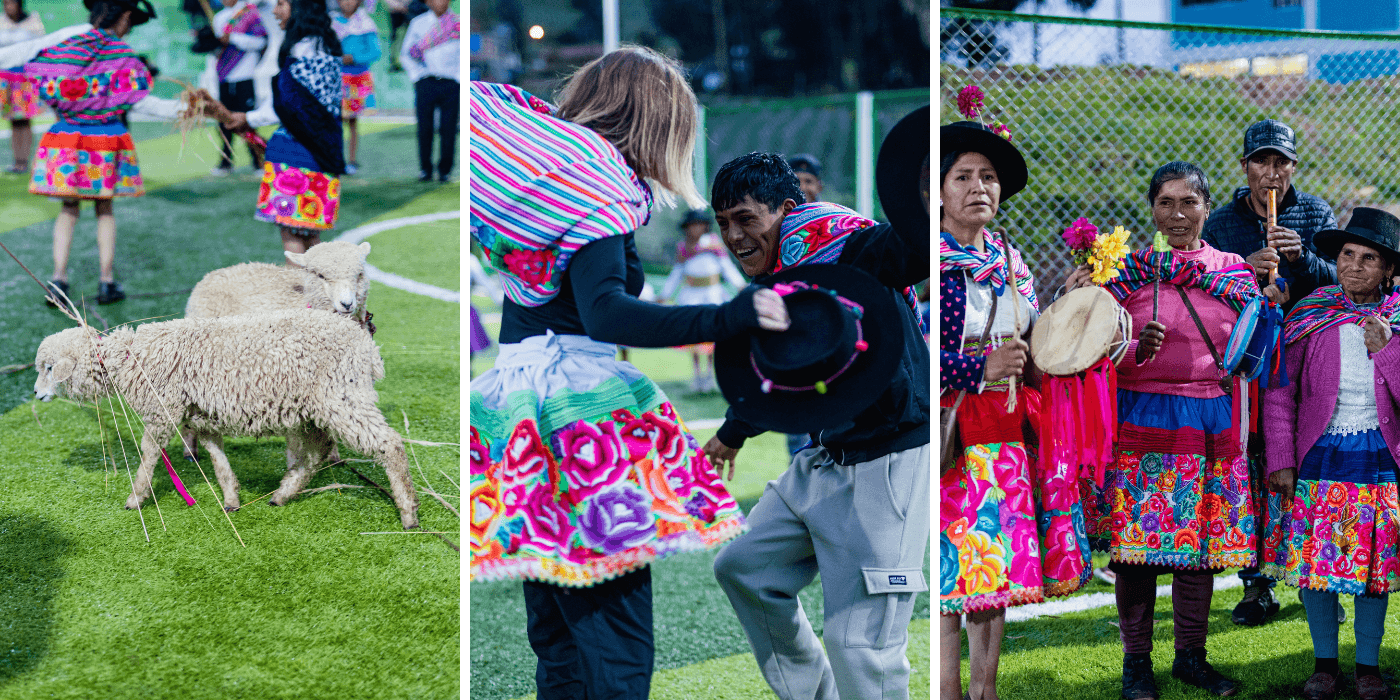
One memory stands out above the rest. At the end of our time there, the community hosted a massive dance celebration where all the kids dressed up in the traditional highlands garb, a few parents sang and played flutes, and there were even two sheep brought in as part of the cultural custom. In the middle of all the loud and joyful festivities, something deeply human happened.
Just as the Incas did thousands of years ago, this community still practices the philosophy of “ayni,” which is the sharing of resources and labor. The community shepherded our team around a shared table filled with food they had grown and prepared themselves. In that moment, reciprocity came to life—not as an obligation, but as a natural way of being. We were no longer domestic and foreign visitors but simply people sharing the same food, connecting on a more basic, human level without the need for many words.
Words may not fully capture what those of us who were there experienced, but I’m certain many would agree on this: during our few days there, we understood that life is better when we are sharing, supporting one another, and emphasizing what truly matters. In the end, I realized we didn’t go to change a reality—we went to be changed by it. And in that process, something within us was deeply moved. Social awareness stopped being an idea and became something real and lived.
For more than two years, we’ve walked alongside the families of Huancavelica, supporting processes that are gradually transforming not only their opportunities, but also how they see their future. We left reminded that family and community offer a richness no socioeconomic status can match.